Problem Guide
Search by name or symptom, filter by problem type and affected plant part.
Problem Type
Affected Part
Found: 7
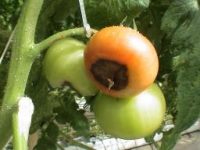
Blossom end rot
A large rot appears on the bottom of the fruit. This happens due to a lack of calcium in the fruit. The deficiency can manifest not only due to its absence in the soil, but also due to irregular watering.
Nitrogen deficiency or excess
When deficient — growth slows down, old leaves lose color, newly growing leaves are yellow-green. Nitrogen is quickly broken down or washed out by water. In case of excess — tomatoes grow many leaves, but bloom little and set fruit sparsely.
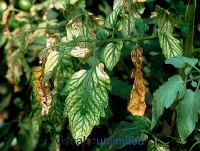
Magnesium deficiency
Magnesium is an important part of chlorophyll. When it is deficient, the veins of old leaves begin to yellow, while the veins themselves remain green. Later, the symptoms spread to young leaves, which begin to wither.
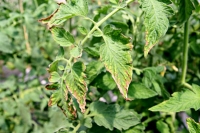
Potassium deficiency
Potassium is responsible for metabolism in the plant. When deficient — leaves begin to wither, deform, yellow, the stem weakens, fruits fall prematurely. When a young plant is deficient — it grows deformed, the edges of older leaves dry out.
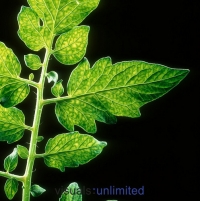
Manganese deficiency
Deficiency causes uneven yellowing of the leaf veins, starting in the top leaves and near the main branches.
Phosphorus deficiency or excess
Phosphorus is necessary for cell growth, flower and fruit formation. When deficient — young plant leaves darken, acquire a purple hue; the growth of an older plant stops, the underside of the leaves and veins are purple. In case of excess — fruits become bitter.
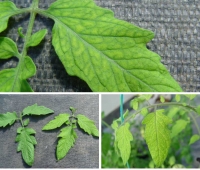
Iron deficiency
Iron is involved in chlorophyll production and helps absorb nitrogen. When deficient — the veins of the top leaves begin to yellow or whiten, while the veins themselves remain green. If the soil pH > 6.8, plants have difficulty absorbing iron.