Larvae (worms)
Symptoms
There are many worms (usually insect larvae) that can cause minor damage or completely destroy a tomato plant. Eggs hatch after overwintering in the soil, larvae crawl to the surface and settle inside the plant, on the stem or leaves. There are also larvae that live in the soil and feed on roots — the plant grows slowly, stunted. To check for pests in the soil, you can insert a carrot near the seedling and check it every couple of days.
Control and prevention
Pick out the larvae, use decoctions / infusions. Garlic infusion (40–50 g / 10 l), wormwood decoction (1 kg / 10 l, boil for 10–15 min), onion peel infusion (0.5 bucket / 10 l). If worms live in the soil, their destruction must be taken care of before planting tomatoes.
Related problems
Similar symptoms might indicate a different cause — compare them.
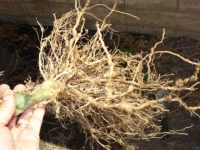
Nematodes
Microscopic roundworms. Harmful root nematodes damage the roots — the plant is undernourished, grows slowly, is weak, and recovers slowly after drought. To check, the plant needs to be pulled out: the root system will be covered with swollen galls.
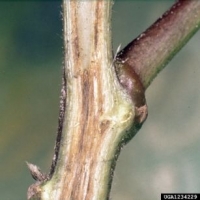
Root Rot
Fusarium oxysporum
Common in tomato gardens. Thrives in warm, acidic soils. Infects the plant through the roots, spreads through the circulatory system. The first symptom is yellowing of the lower leaves; dark brown spots are found when the stem is cut. Can affect potatoes, peppers, eggplants.
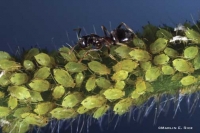
Aphids
These are small green (sometimes reddish, brown) flies that usually attack in swarms. They suck the sap from leaves or stems, but do not touch the fruits. A tomato plant can withstand significant aphid attacks, but they should not be neglected, as too many can weaken the plant. These flies can also be carriers of viral diseases. A similar species is whiteflies; they act similarly, but are half the size. Aphids are protected by ants: contrary to popular belief, ants do not destroy aphids, but help them thrive.