Nematodes
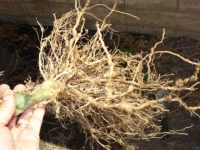
Symptoms
Microscopic roundworms. Harmful root nematodes damage the roots — the plant is undernourished, grows slowly, is weak, and recovers slowly after drought. To check, the plant needs to be pulled out: the root system will be covered with swollen galls.
Control and prevention
Pests prefer warm, sandy soils. For prevention, manure or organic matter can be added to the soil. There are no safe chemical preparations — if infected, do not plant tomatoes in the same place next year or choose resistant varieties.
Related problems
Similar symptoms might indicate a different cause — compare them.
Larvae (worms)
There are many worms (usually insect larvae) that can cause minor damage or completely destroy a tomato plant. Eggs hatch after overwintering in the soil, larvae crawl to the surface and settle inside the plant, on the stem or leaves. There are also larvae that live in the soil and feed on roots — the plant grows slowly, stunted. To check for pests in the soil, you can insert a carrot near the seedling and check it every couple of days.
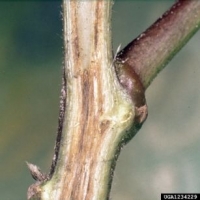
Root Rot
Fusarium oxysporum
Common in tomato gardens. Thrives in warm, acidic soils. Infects the plant through the roots, spreads through the circulatory system. The first symptom is yellowing of the lower leaves; dark brown spots are found when the stem is cut. Can affect potatoes, peppers, eggplants.
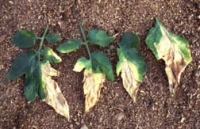
Verticillium Wilt
Verticillium albo-atrum / Verticillium dahliae
Symptoms are very similar to root rot, the difference is that this fungus prefers cooler, neutral pH soils. Brown spots may also appear on the leaves in addition to yellowing.