Spider mites
Symptoms
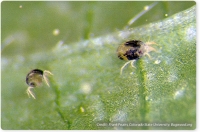
A creature the size of a salt crystal with two black spots on its back. They usually weave webs on the underside of the leaf, causing the most problems during the hottest and driest summer months. They suck plant sap — yellow spots develop in the affected areas, which later turn brown and die.
Control and prevention
Spray the undersides of the leaves with a green soap solution.
Related problems
Similar symptoms might indicate a different cause — compare them.
Aphids
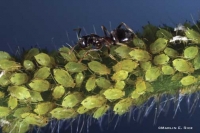
These are small green (sometimes reddish, brown) flies that usually attack in swarms. They suck the sap from leaves or stems, but do not touch the fruits. A tomato plant can withstand significant aphid attacks, but they should not be neglected, as too many can weaken the plant. These flies can also be carriers of viral diseases. A similar species is whiteflies; they act similarly, but are half the size. Aphids are protected by ants: contrary to popular belief, ants do not destroy aphids, but help them thrive.
Stink bug
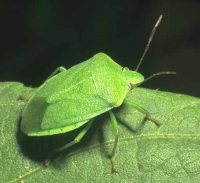
A flat, shield-shaped brown or green insect that emits an unpleasant odor when disturbed. It only attacks fruits, preferring green ones. It punctures the skin and sucks the juices, leaving sunken, colorless spots.
Larvae (worms)
There are many worms (usually insect larvae) that can cause minor damage or completely destroy a tomato plant. Eggs hatch after overwintering in the soil, larvae crawl to the surface and settle inside the plant, on the stem or leaves. There are also larvae that live in the soil and feed on roots — the plant grows slowly, stunted. To check for pests in the soil, you can insert a carrot near the seedling and check it every couple of days.